


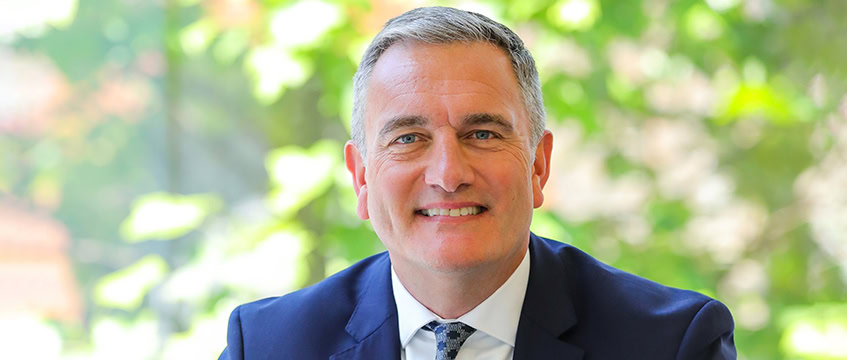
Richard Bruce is the Chief Executive of leading UK property consultancy Carter Jonas, having joined the firm in September 2023. In this Q&A, he explains how the firm has been planning for the next five years, the role of business services in creating this strategy, and his key advice for those starting out in leadership.
What have been your priorities since you joined the firm?
The first 18 months were spent getting around the business to understand our people, the firm and culture, and plan for our new five-year strategy, Vision 2030. My task was to bring everyone together to develop this, to ensure that I had buy-in and agreement from everyone before taking any actions. The strategy has really put in place the building blocks and roadmap that will take us through until 2030 and what that means for our clients, people and brand.
We launched the strategy six months ago, with an event bringing together more than 800 of our people in Birmingham. It marked the first firm-wide session of its kind. The main purpose was to present the new strategy holistically. Given the changes – my leadership as the new chief executive, along with the new plan – we wanted to make it fresh and exciting, and it was great to launch it in this way. It felt right, and honestly, it was just really inspiring to see everyone in a room like that.
Can you tell me a little about the strategy?
It aligns the firm around clear and consistent strategic objectives on clients, people, brand, financials and the need to keep evolving. It commits us to strengthening and deepening our core services, whilst focusing on integration. As we grow, we will continue to improve the bonds that unite us to create opportunities for everyone.
We are a diverse firm, and how clients define service will differ. We are always mindful of this and employ a tailored client approach. We actually involved a range of clients in the launch of our strategy, asking their thoughts on the benefits of working with us. Consistent themes emerged, particularly around trusted relationships, a partnership approach and responsiveness.
Part of my role is to ensure people, activities and clients are connected, which is a very important part of our strategy. As a result, we have a plan, around which the level of understanding and buy-in from across the business is high, structured around five pillars and five distinct business lines: Commercial, Planning and Development, Infrastructure, Residential, and Rural, all with a refreshed structure in place.
What roles does business services play in this?
The strategy is based on five pillars, and each has an ownership element to it. The owner of each pillar is a business services leader, who works in conjunction with a partner and the wider firm. They are accountable for their pillar, whether that’s HR on people, or finance on profitability, and are empowered to work across the organisation in the appropriate way.
We want to have the right people in the right roles and this includes having business services professionals who are subject matter experts working together across the firm. Often, they bring expertise from outside of the industry too, which can be interesting to learn from.
Has the profile of business services grown?
Having worked in several different professional services settings, I’ve seen the profile of business services rise. The really good firms recognise that no one person can be an expert in everything, but with the right structure in place, with subject matter experts, everybody works together to deliver success.
There has been an elevation of business services over the past ten years, but even more so over the past five. The world of work is changing, and we need experienced professionals in leadership positions who can advise our real estate experts on managing technology, improving profitability and engaging our people, among other expertise. We’re an open knowledge capital business.
Looking back at your own career, was a leadership position always the ultimate goal?
Broadly, yes. My father was self-employed, and I was always interested in business. It appealed to me to lead a business, mostly because I enjoyed working with people. Business is almost unlimited in its scope and opportunity – there are so many areas to go into.
When I started out, I had a distant goal in mind, but I achieved it through trial, error and learning. I invested in myself, took time to think outside the immediate world of what I was doing, and tried to remain curious about all elements of the business world.
What are some mantras that have stuck with you throughout your career?
When I was starting out in my first role, I had a very good manager. He told me to “just do what you say you’re going to do”. That’s a really good mantra to start with, as you’d be amazed at how often that doesn’t happen. Be accountable, take responsibility and you’ll figure it out. Others are also more likely to help when you take that approach.
Number two is thinking about how you can go the extra mile. It’s about doing things differently. If you have a task or project, how can you change an element to make it more exciting or engaging? It can be as simple as sharing an interesting article that you find relevant to the conversation or having a coffee with someone who is struggling. Often it is the small things that create a positive experience and can make a huge difference. Every time I do something, I try and make it a little better than the last time.
If you’re looking for a new challenge, an opportunity to spark innovation and the chance to shape the future of a firm, Totum can help. To discuss our Leadership recruitment practice, contact either [email protected] or [email protected]